01
The transfer plan
In the workshop, your team picks the barriers of the course and places under each one the action cards that lift it.
Discover the methodThe Action Flow platform
With the Action Flow method, your team decided who does what, and when, so a course actually gets applied. The platform does the rest: each action reaches the participant, their manager, or their peers at the right moment.
| Who | D-10 | D-3 | Day D | D+3 | D+15 | D+45 | D+90 |
|---|---|---|---|---|---|---|---|
| Participant | Self-assessment | Training | Practice | Active recall | Quiz | Reflection | |
| Manager support | Shared objectives | Application frame | Check-in at D+15 | ||||
| Peer support | Sharing group |
How it works
In the workshop, the Action Flow method produces a transfer plan. The Action Flow tool carries it out, just as it was designed.
Understand transferThe Action Flow method
01
In the workshop, your team picks the barriers of the course and places under each one the action cards that lift it.
Discover the methodThe Action Flow tool
02
Each action in the plan becomes a dated activity, with an owner.
03
Each person receives theirs at the right moment, and the platform follows up.
04
A session report goes back to your leadership or your client.
Replayed for every session.
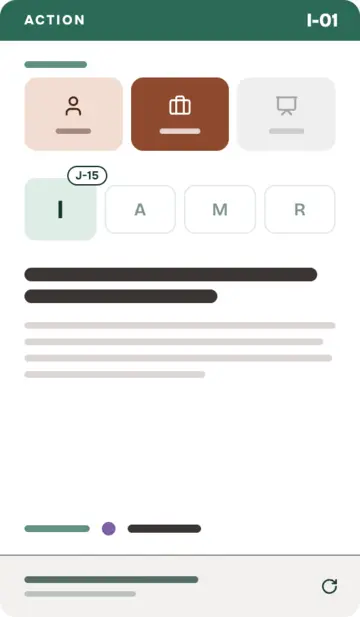
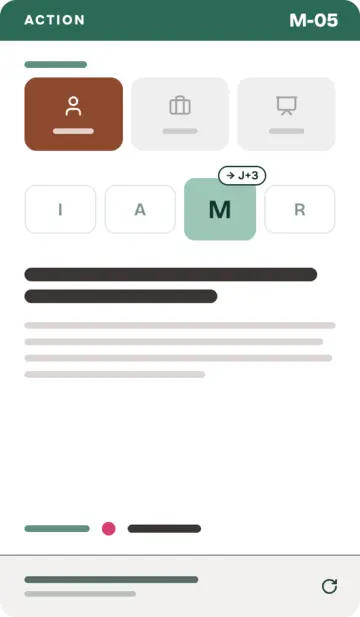
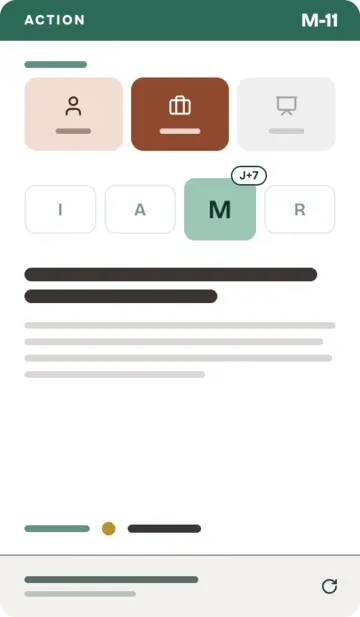
Each card placed in the workshop becomes, in the tool, dated activities sent to the right person. Three examples.
In the workshop
In the tool
A message to book a meeting with the participant, and the outline of the conversation to prepare it.
In the workshop
In the tool
A dated practice the first try, on the job.
A reminder if the try has not happened yet.
In the workshop
In the tool
The first pair check-in on what was tried.
More check-ins through the testing phase.
A monthly check-in until the practice holds.
Check-ins happen on video, built into Action Flow.
On one side, the learning team follows its sessions; on the other, the participant receives their actions and completes them. Five screens from the Action Flow platform, with session content hidden.
The learning team
The participant
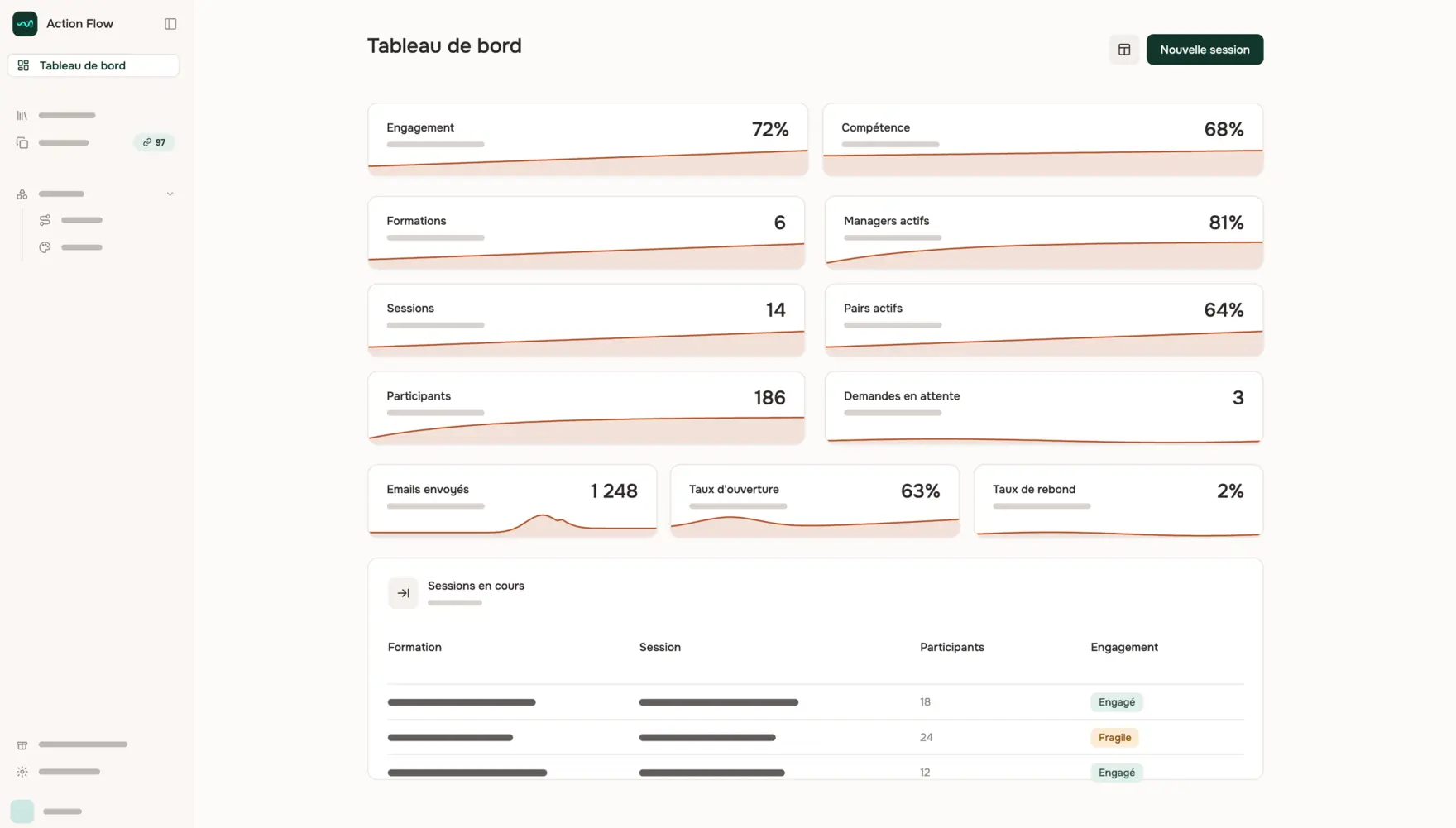
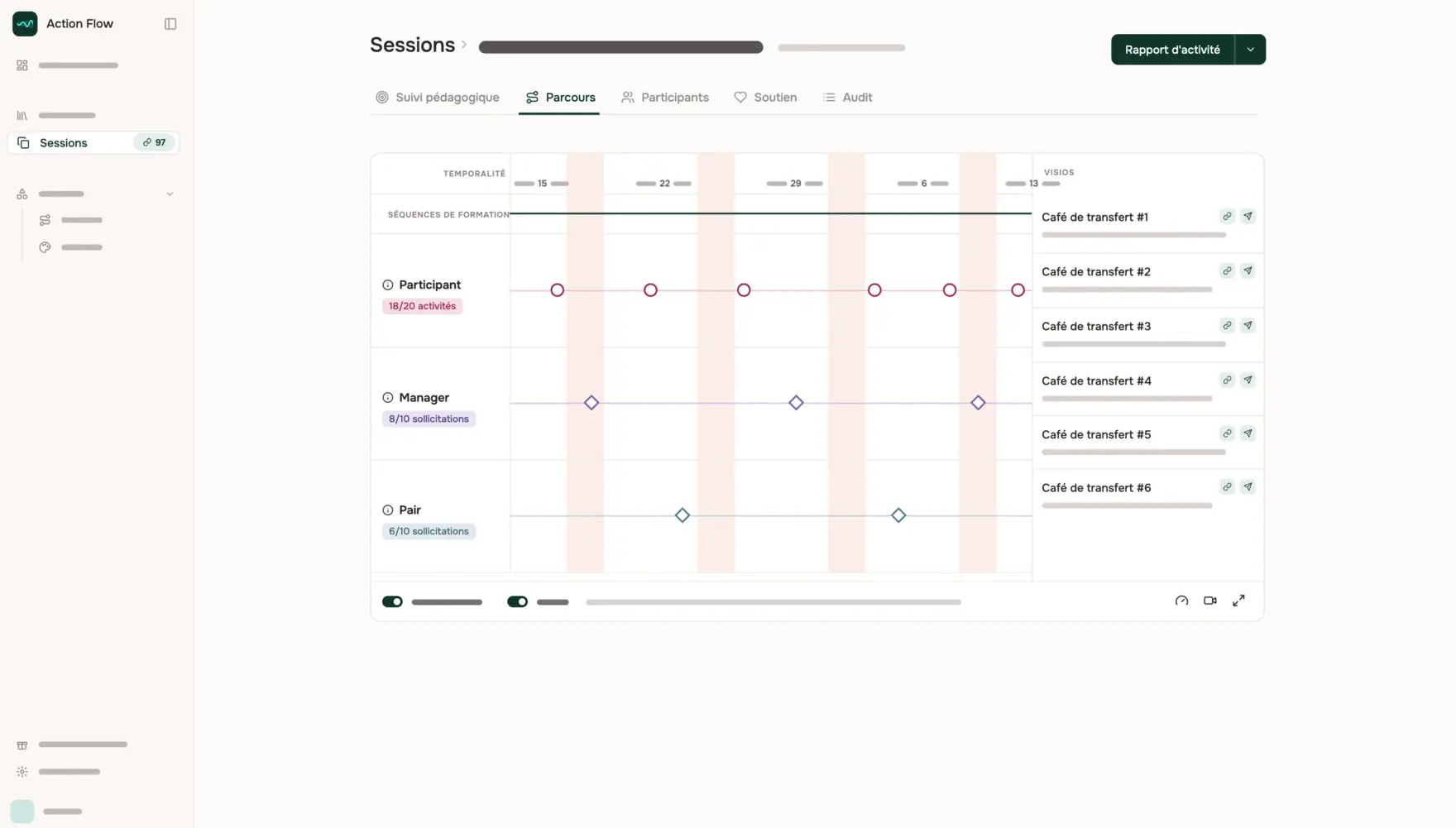
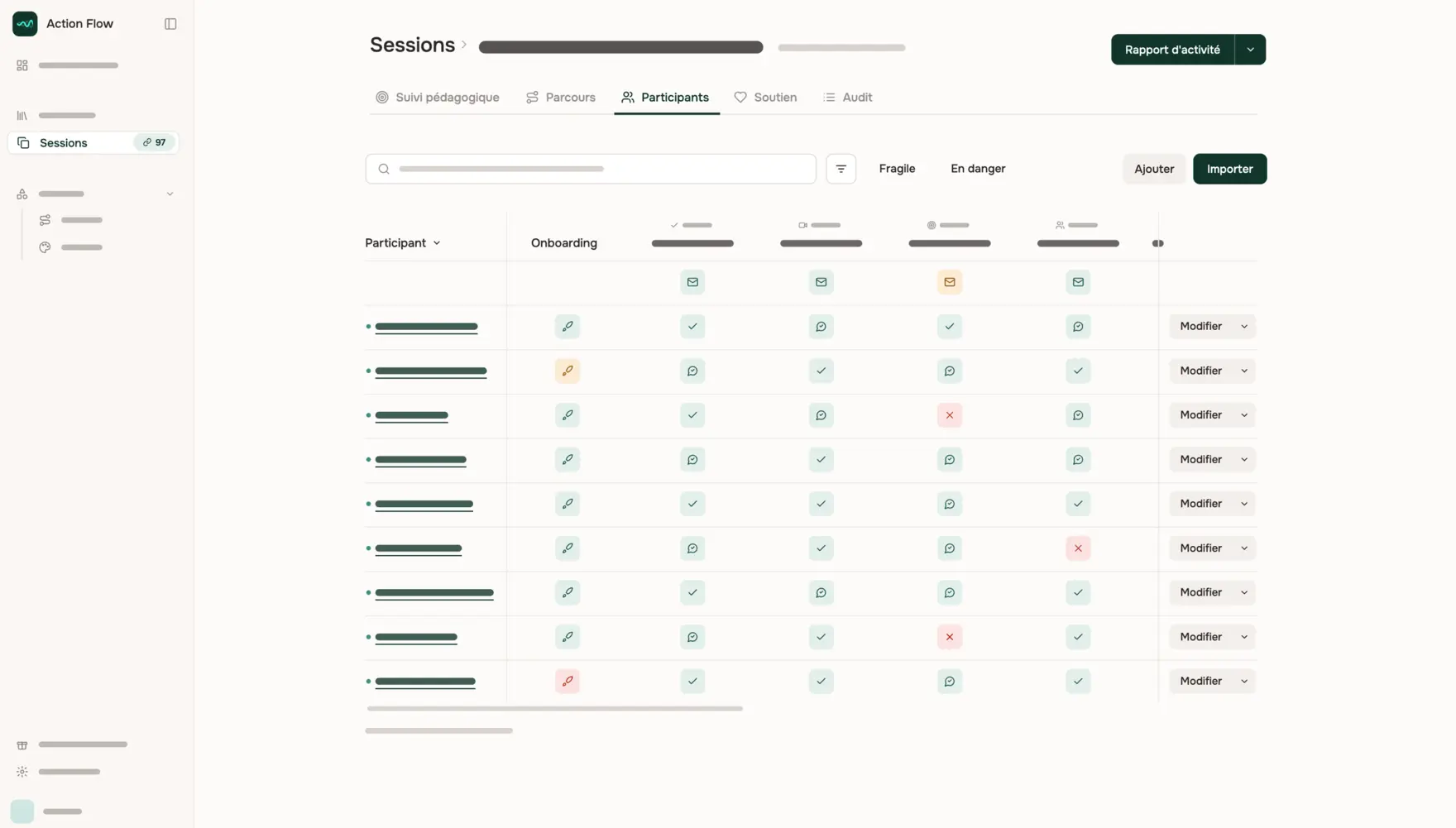
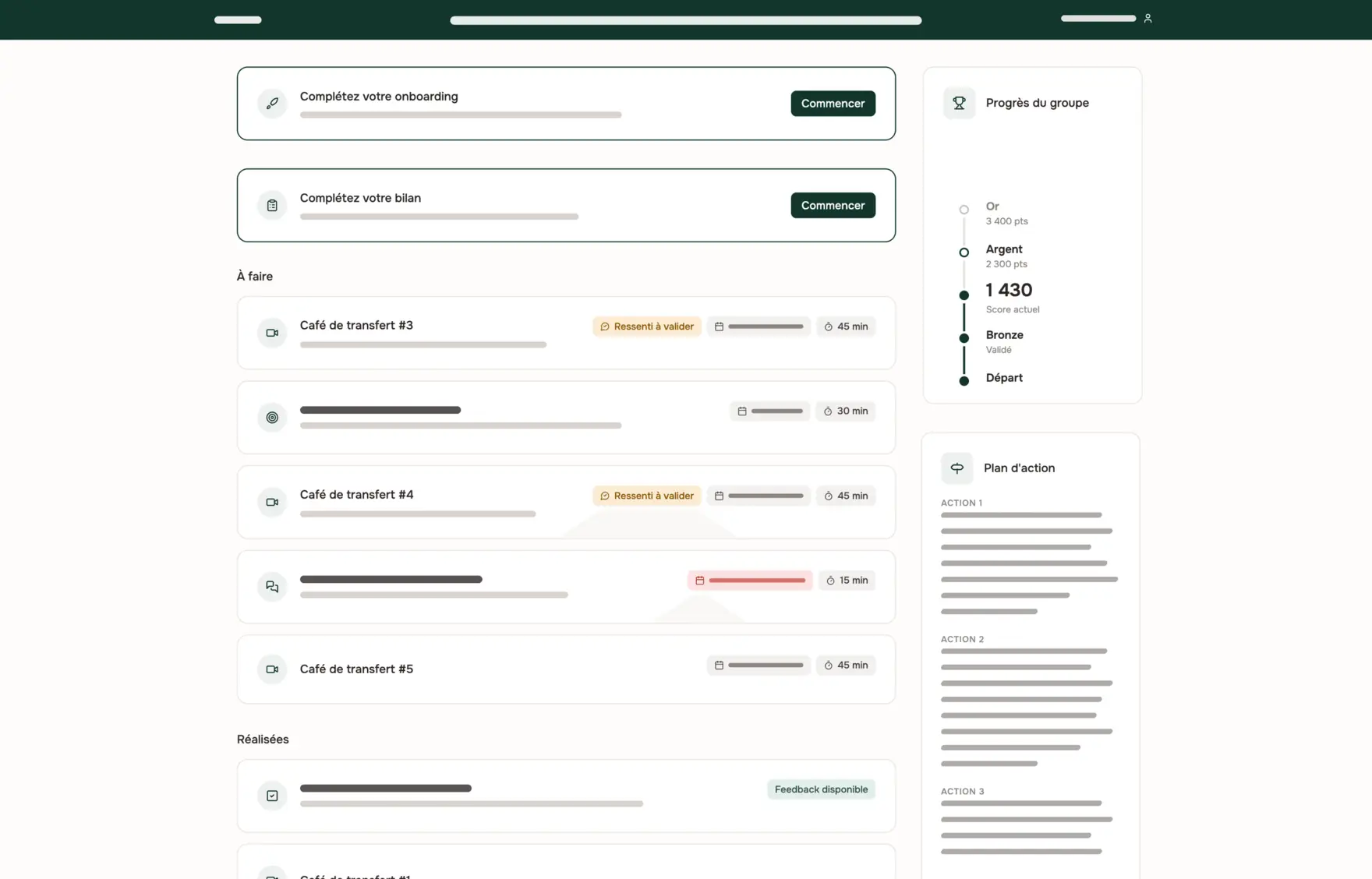
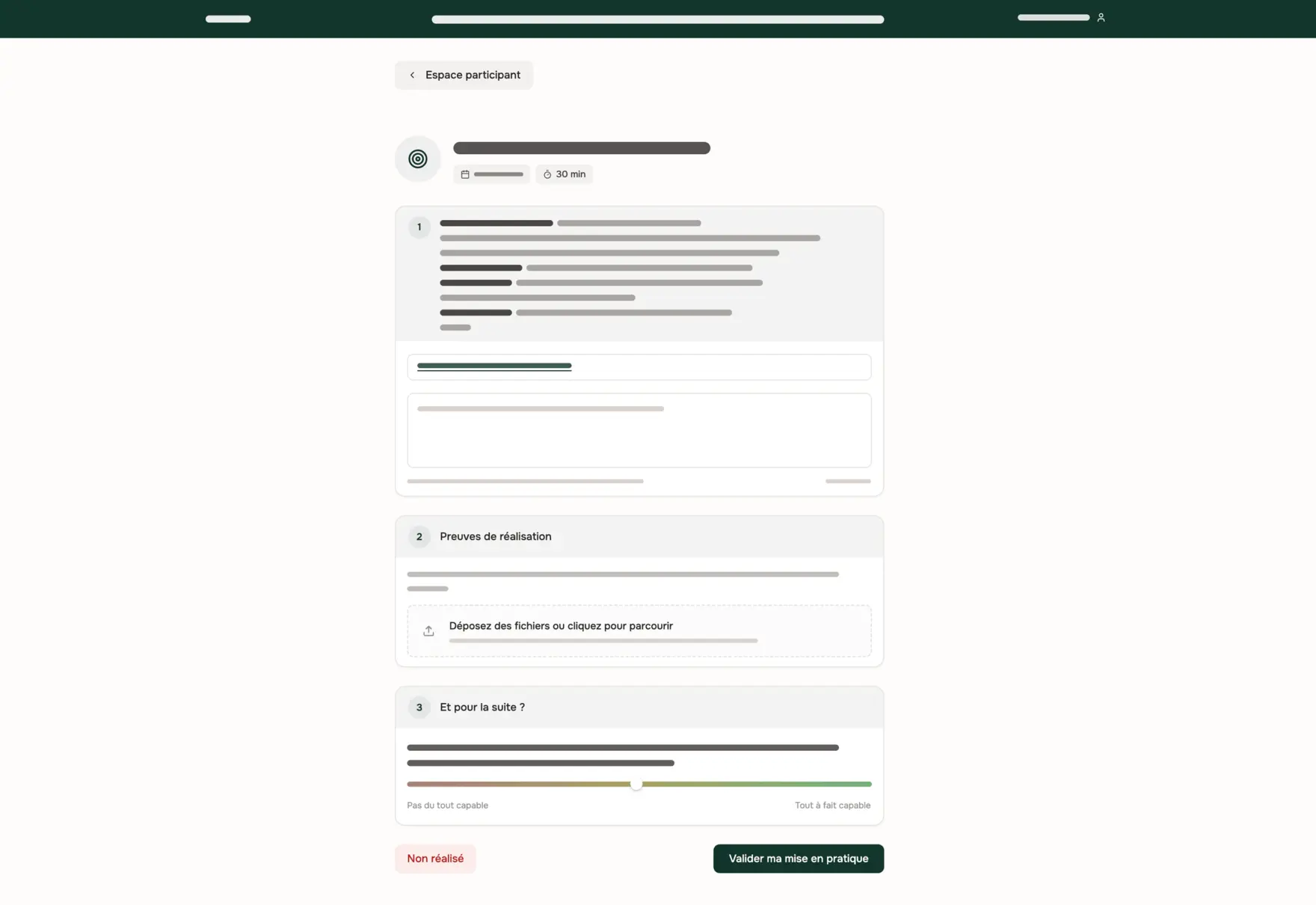
Each person has their own thread of activities. The participant invites their manager and their peers, who can decline.
What the Action Flow platform does. It keeps the calendar, sends the activities, follows up, and makes visible who did what.
What stays with people. The participant takes action. The manager creates the chance to apply. Peers share. The trainer designs the path and stays reachable.
Simple for participants. No account and no password: an email, a click, a reply. Reminders go out before the due date, never at the weekend.
Cards say what to do and when; activities are the form they take in the tool. Each activity is tied to a learning objective, and the tool flags objectives left uncovered.
01
02
03
five questions on confidence, chances to apply, and perceived support.
engagement, and progress (results and sense of efficacy).
comparable from one session to the next.
without replacing your quality process.
Action Flow does not replace your LMS: it handles what happens around the course. Data can be exported, and integration with training-management tools is in preparation.
Yes, the Action Flow platform: your first session is free, with no card, on a real training with real participants. The trial covers the tool only; the Action Flow method, its card deck, and our accompaniments are not included.
Most often a pedagogical lead or a training manager designs and follows the path. The trainer keeps the substance: the skills aimed at, and the feedback to participants.
Designing a path takes 1 to 2 hours, once, and it can be reused. After that, what remains is to read what comes back and respond: the platform takes the logistics, not the craft.
No. Action Flow takes care of what happens around the training, not the content.
Before the training, your team sets a success criterion for each phase. The platform then follows the group’s engagement and progress (self-assessment before and after, sense of efficacy), then produces a session report that can be compared from one session to the next. To connect a training to the organization’s stakes, the accompaniment starts from the chain of objectives and draws on Robert Brinkerhoff’s Success Case Method.
The platform produces follow-up and evaluation material you can use in an audit. It does not replace your quality approach.
Another question? Write to us
Share one of your trainings with us and, in thirty minutes, we analyze together how to multiply its impact through effective transfer engineering.